Infinite Energy is closer than you think
online slides version
Energy
- fire : \(10^{-8}\%\)
\(200\text k\) years ago
pick wood burn
smoke, CO
- fossil fuel: \(10^{-7}\%\)
\(2 \text k\) years ago
dead body from plants, dinosaurs and even our ancestors
greenhouse gases
- electricity: \(200\) years ago
currently a energy transmission method
- fission: \(0.09\%\)
\(<100\) years,
heavy elements are rare in the universe (U, Pu)
environment impact (Discharge of radioactive water of the Fukushima Daiichi Nuclear Power Plant, start from this year, and continue for 30 years)
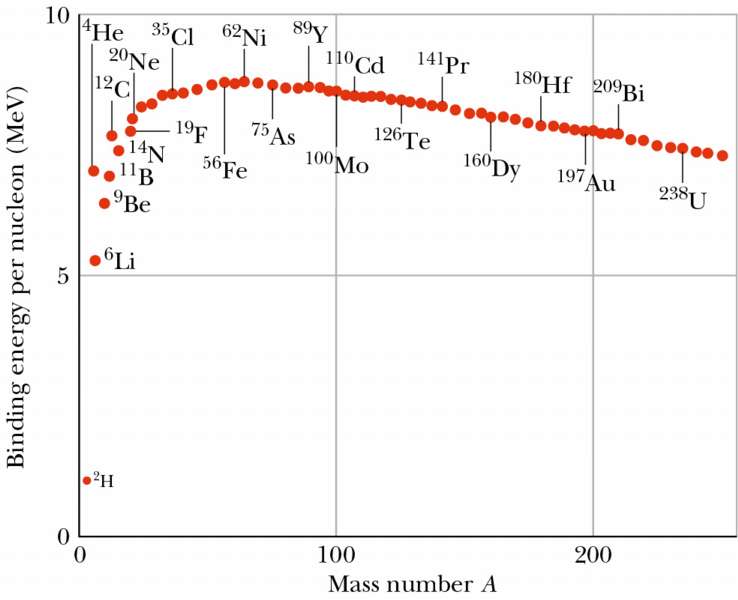
- fusion: \(0.7\%\)
still doing research,
but sun has already doing fusion for \(5\) billion years
-
blackhole: \(33\%\)
-
antimatter: \(100\%\)
If we compress the \(13.8\) billion years into one day. The solar system formed at noon. Human appear in the last half minute. Modern Human Civilization appear in the last millisecond. --Cixin Liu
Fusion
Lawson criterion:
\(T\): Temperature
\(n\) plasma density
\(\tau_E\) confinement time $$ P\propto Tn\tau_E $$
| fusion | \(Tn\tau_E(m^{-3}KeVs)\) | energy(\(MeV\)) |
|---|---|---|
| \(\ce{D + T -> n + ^4He}\) | \(2.9\times 10^{21}\) | \(17.589\) |
| \(\ce{D + ^3He -> p + ^4He}\) | \(5.1\times 10^{22}\) | \(18.353\) |
| \(\begin{aligned}&\ce{5D -> 2^4He + 2n + p}\\&\ce{n + p^{hot} -> D}\end{aligned}\) | \(1.1\times 10^{23}\) | \(43.2\) |
| \(\begin{aligned}&\ce{3D -> p + n + ^4He}\\&\ce{n + p^{hot}-> D}\end{aligned}\) | \(1.3\times 10^{23}\) | \(21.6\) |
| \(\ce{D + D -> n + ^3He}\) | \(5\times10^{23}\) | \(3.269\) |
| \(\ce{D + D -> p + T}\) | \(5\times 10^{23}\) | \(4.032\) |
| \(\ce{2T -> ^4He + 2n}\) | \(2\times 10^{23}\) | \(11.3\) |
| \(\ce{p + B_{11}-> 3^4He}\) | \(4\times10^{24}\) | \(8.682\) |
| \(\ce{p + ^6Li -> ^4He + ^3He}\) | \(1.25\times10^{25}\) | \(4\) |
Device
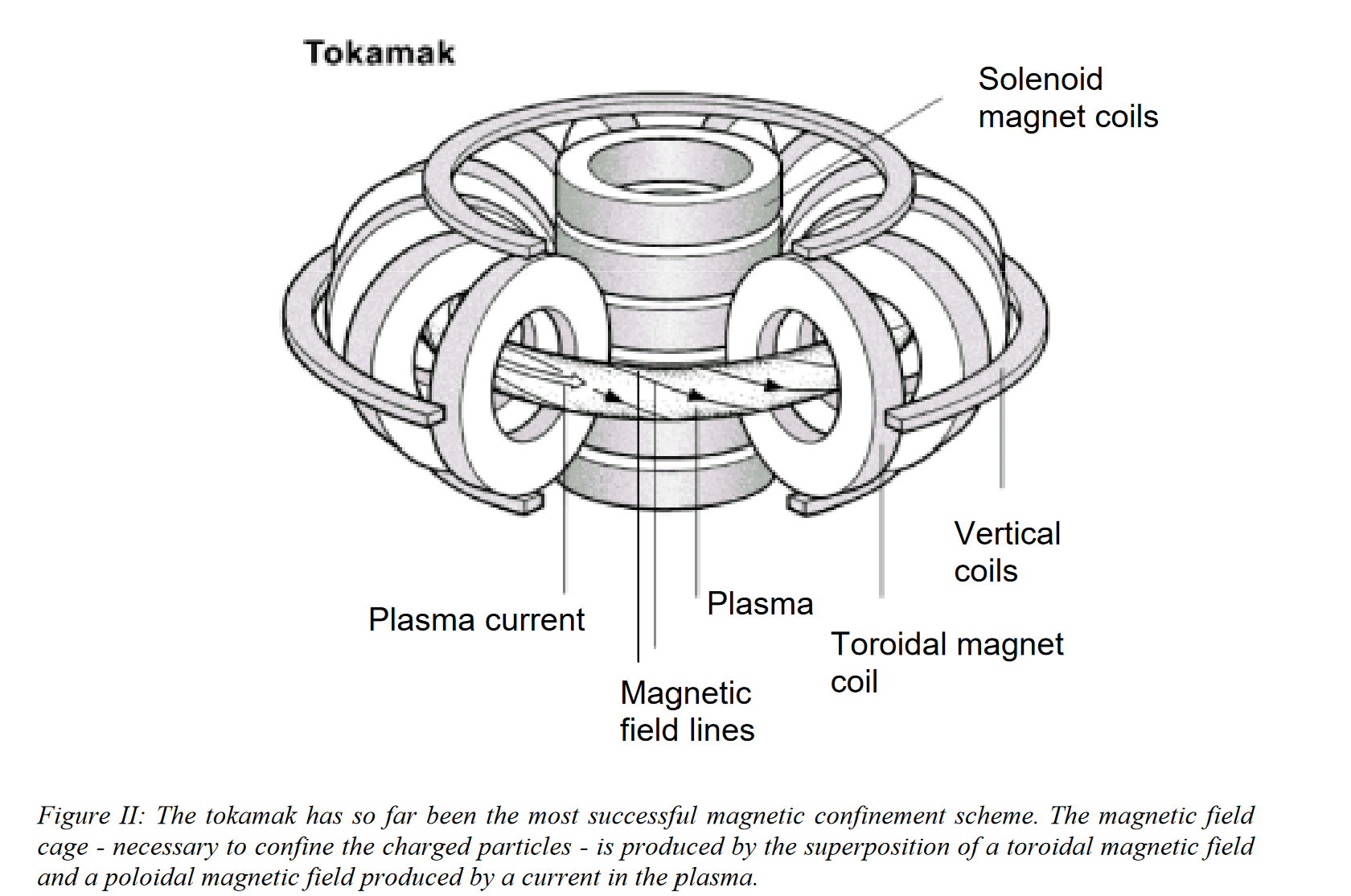
Tokamak
A tokamak is a device which uses a powerful magnetic field to confine plasma in the shape of a torus
The electric current in Solenoid coils should rise linearly
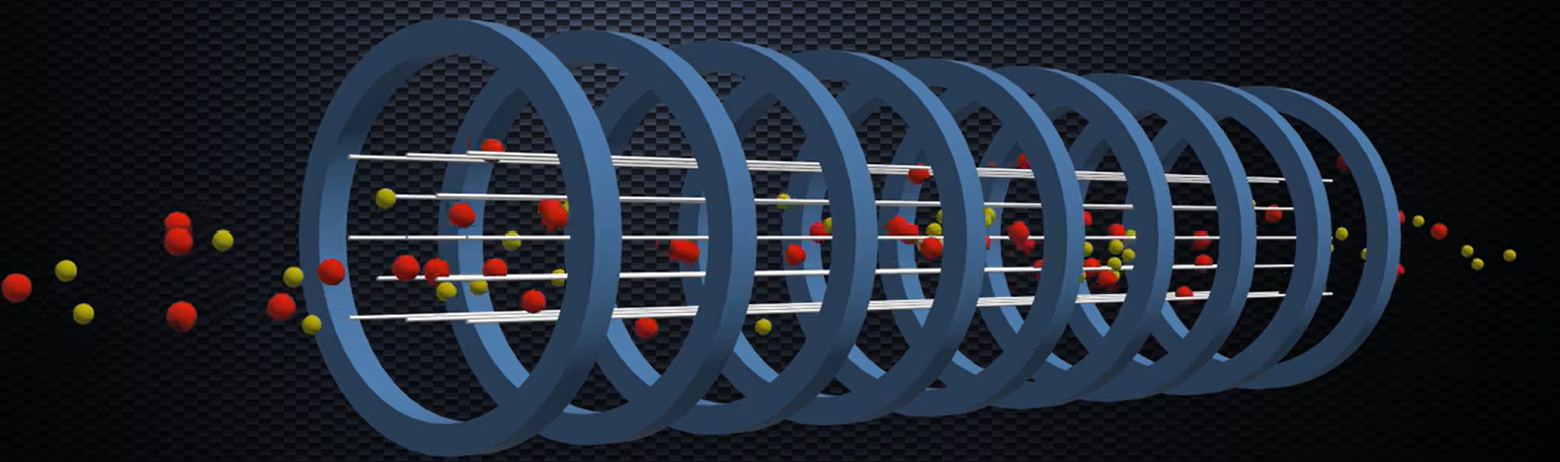
lamor procession
Toroidal Coils
Torus shape

Central Solennoid Coils
linear increasing current, super conducting
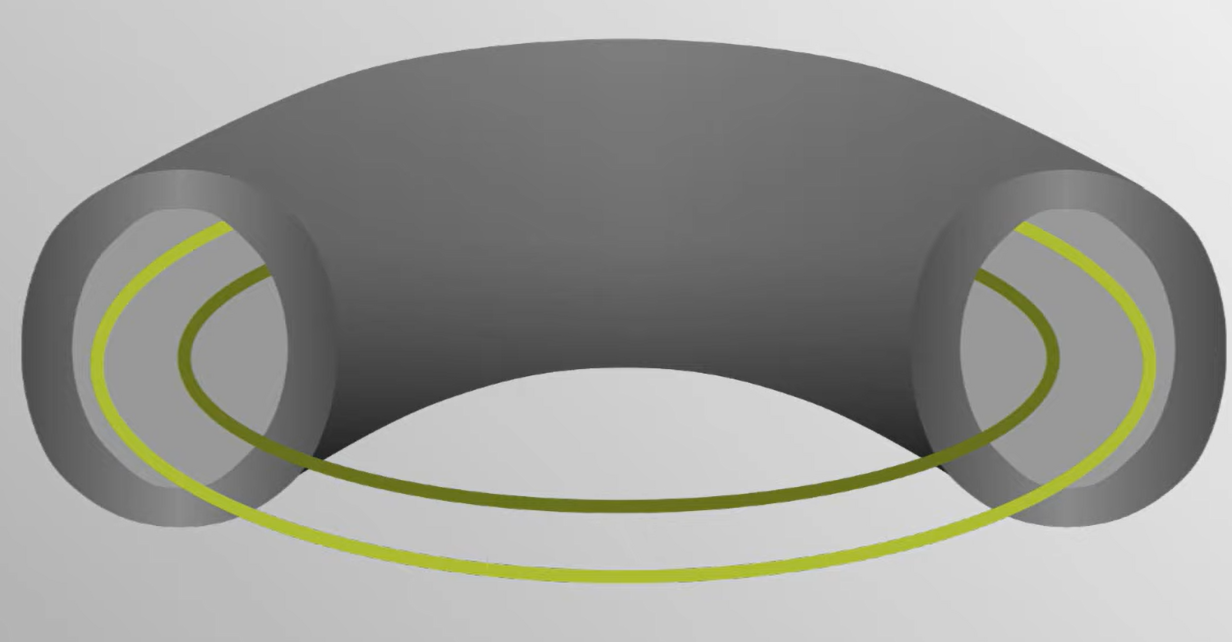
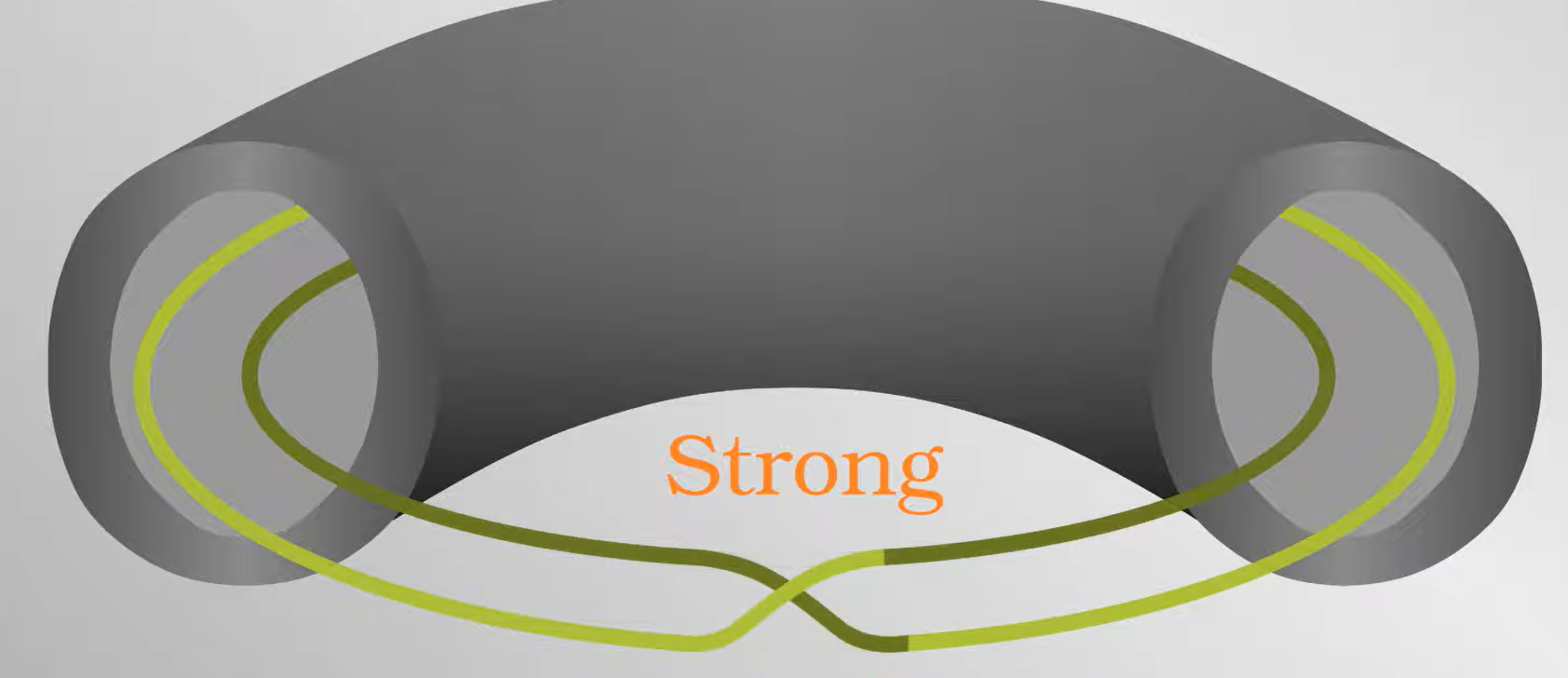
Poloidal Coils
control the section area of the plasma

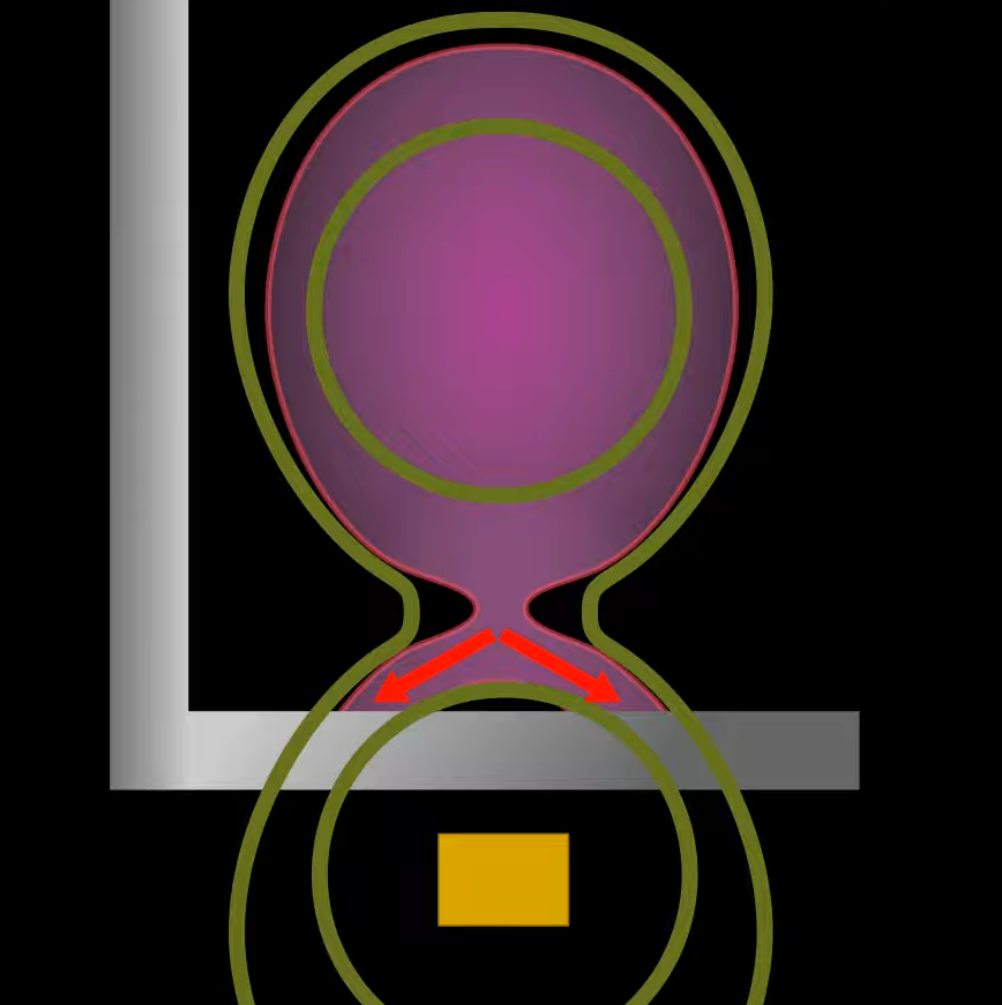
Divertor
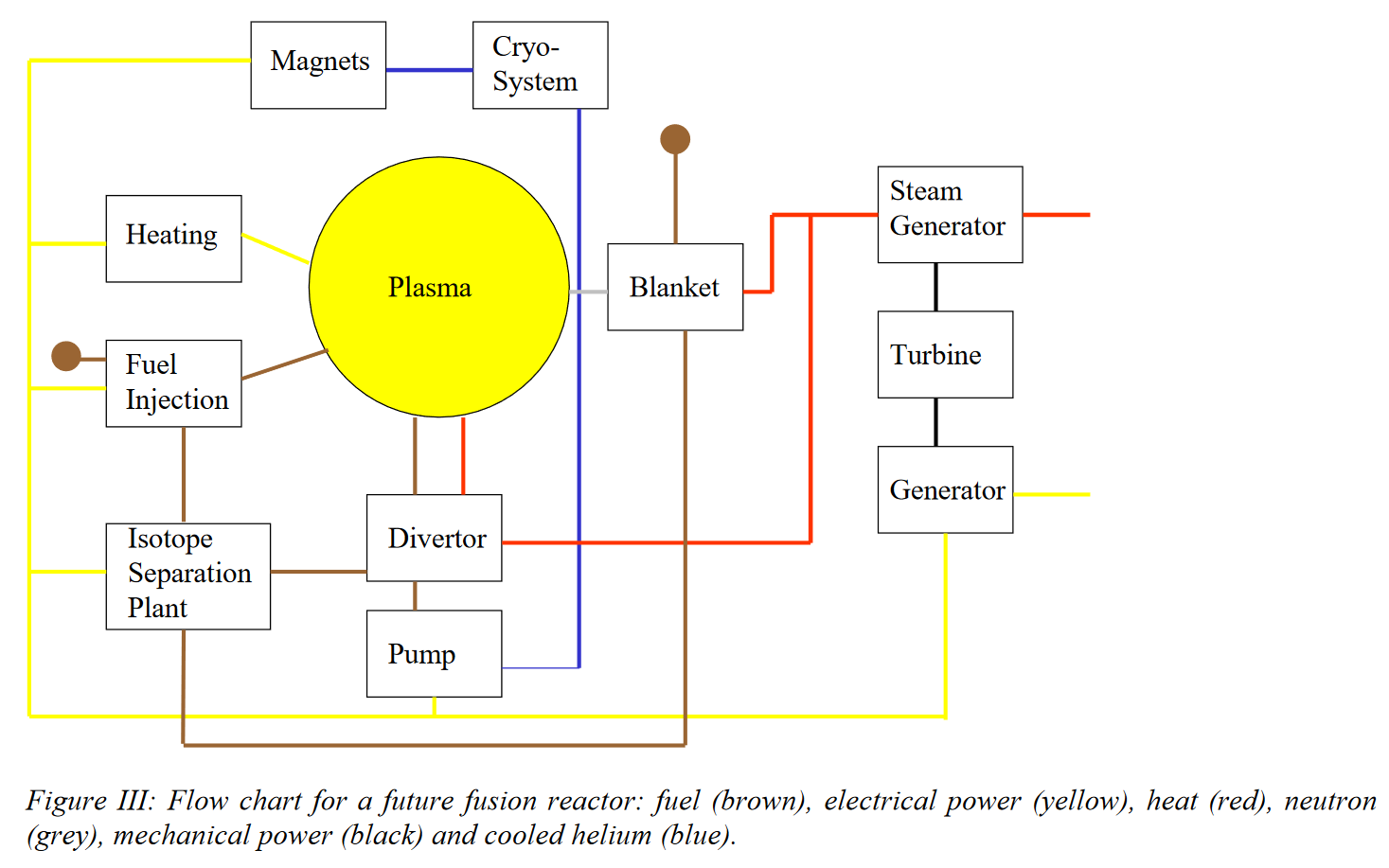
remove heavier ions, transfer fusion energy
Fusion Power
JET produce short energy of \(Q=65\%\)
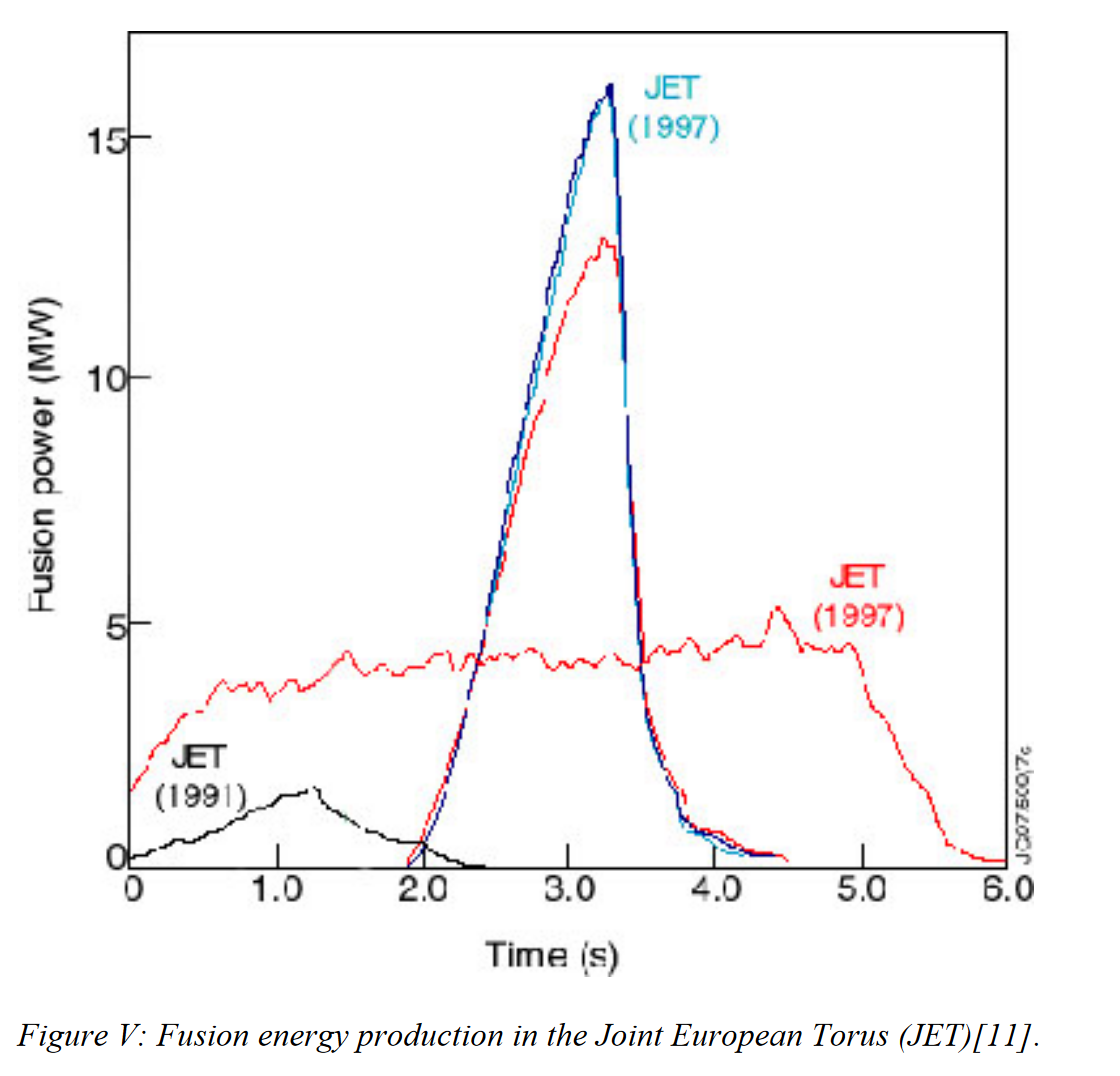
Development
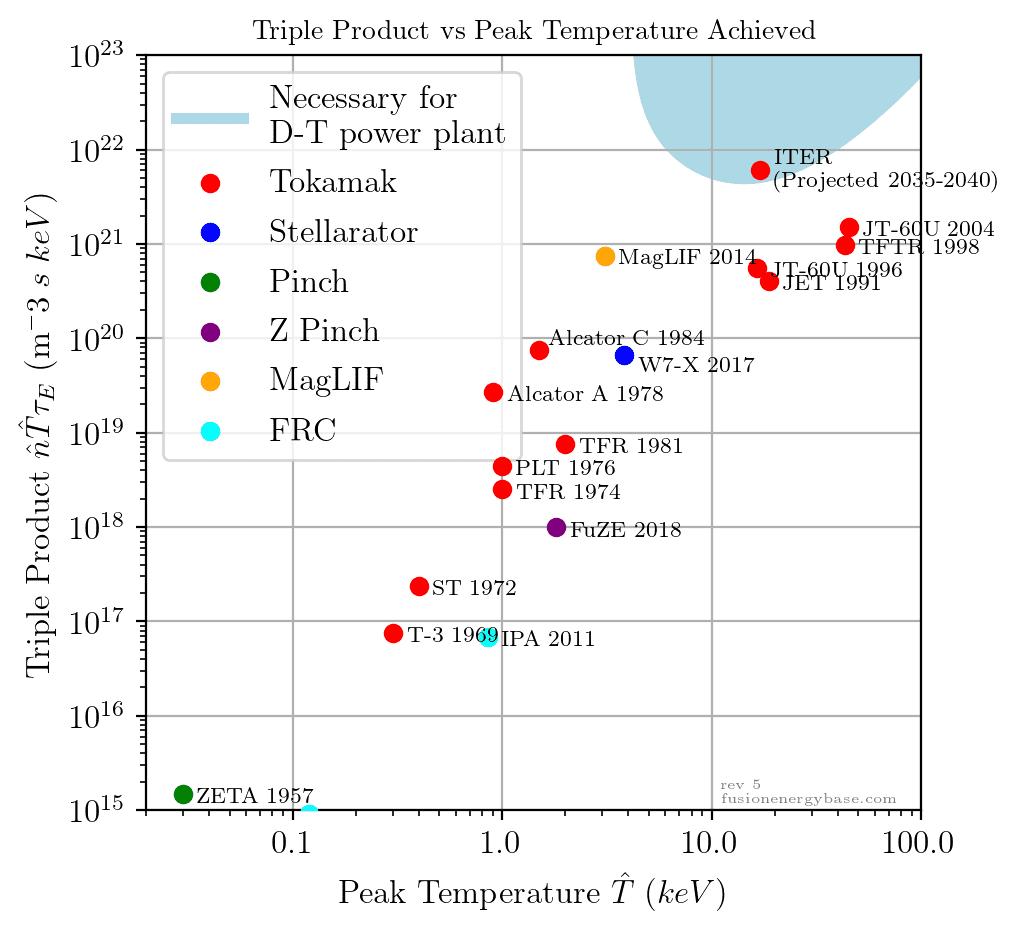
https://www.fusionenergybase.com/article/measuring-progress-in-fusion-energy-the-triple-products
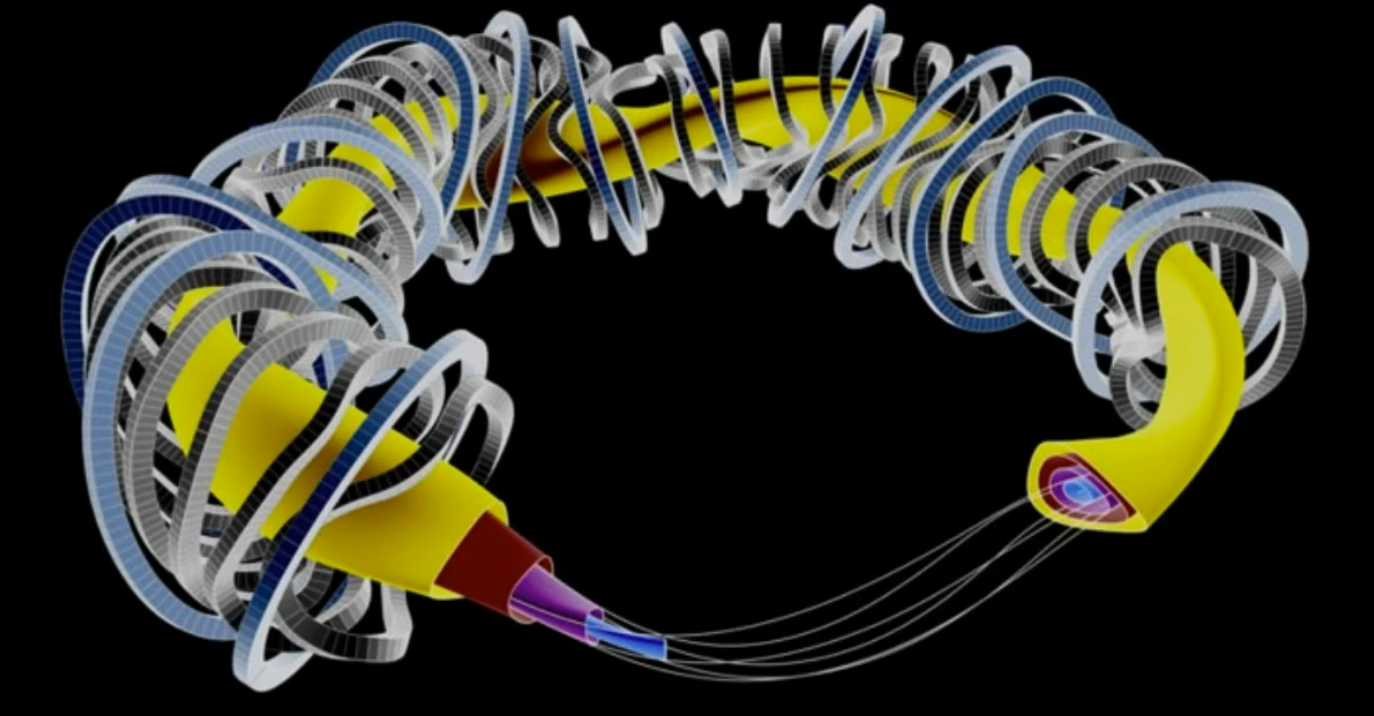
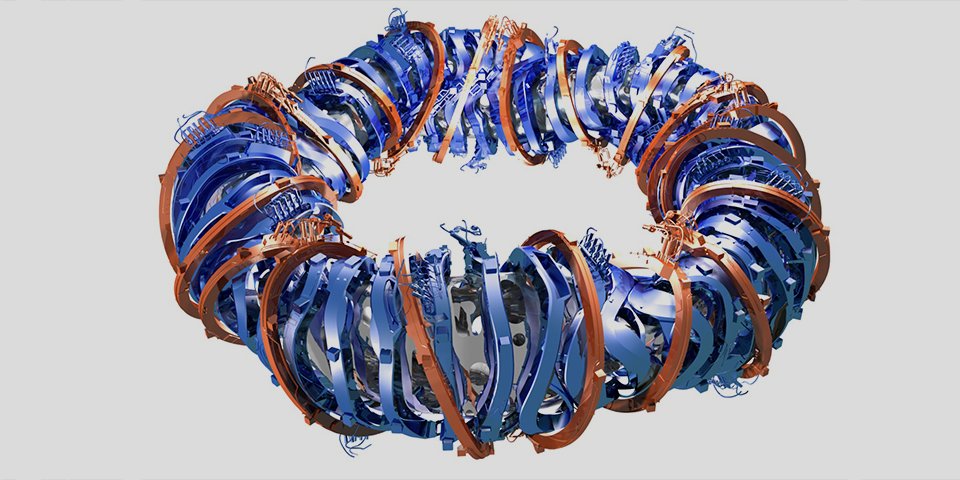
Stellarators
but complex engineering problem
Z-pinch
unstable
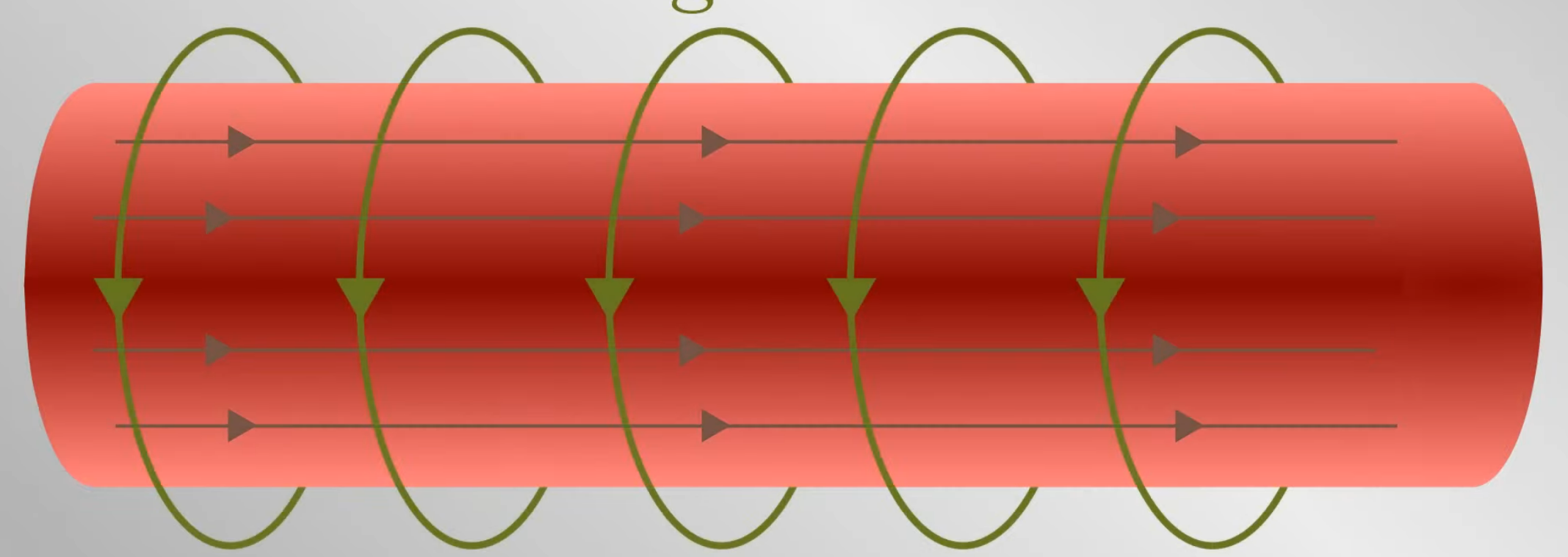
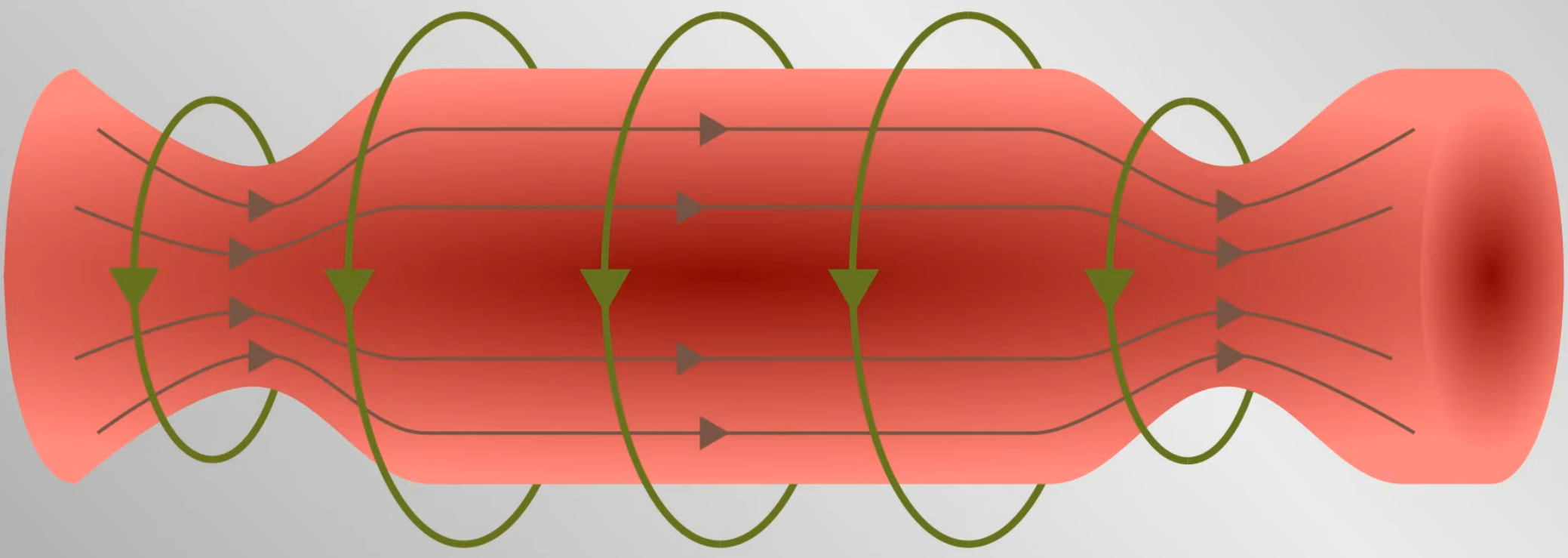
Sausage Instability
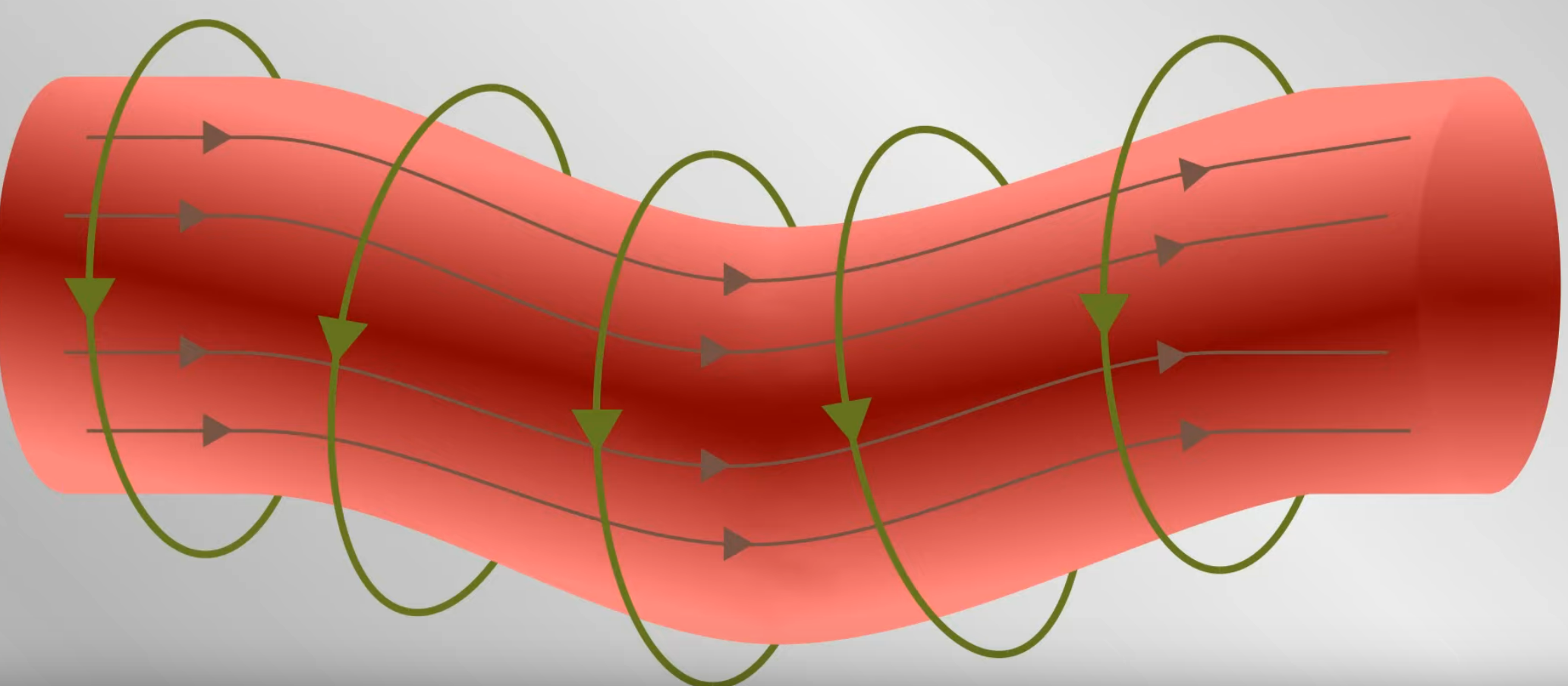
Kink Instability
\(\theta\) pinch
Lenz's Law, current of plasma is reverse of the applied current in coils
Field Reverse Configuration(FRC)
self stable torus plasma
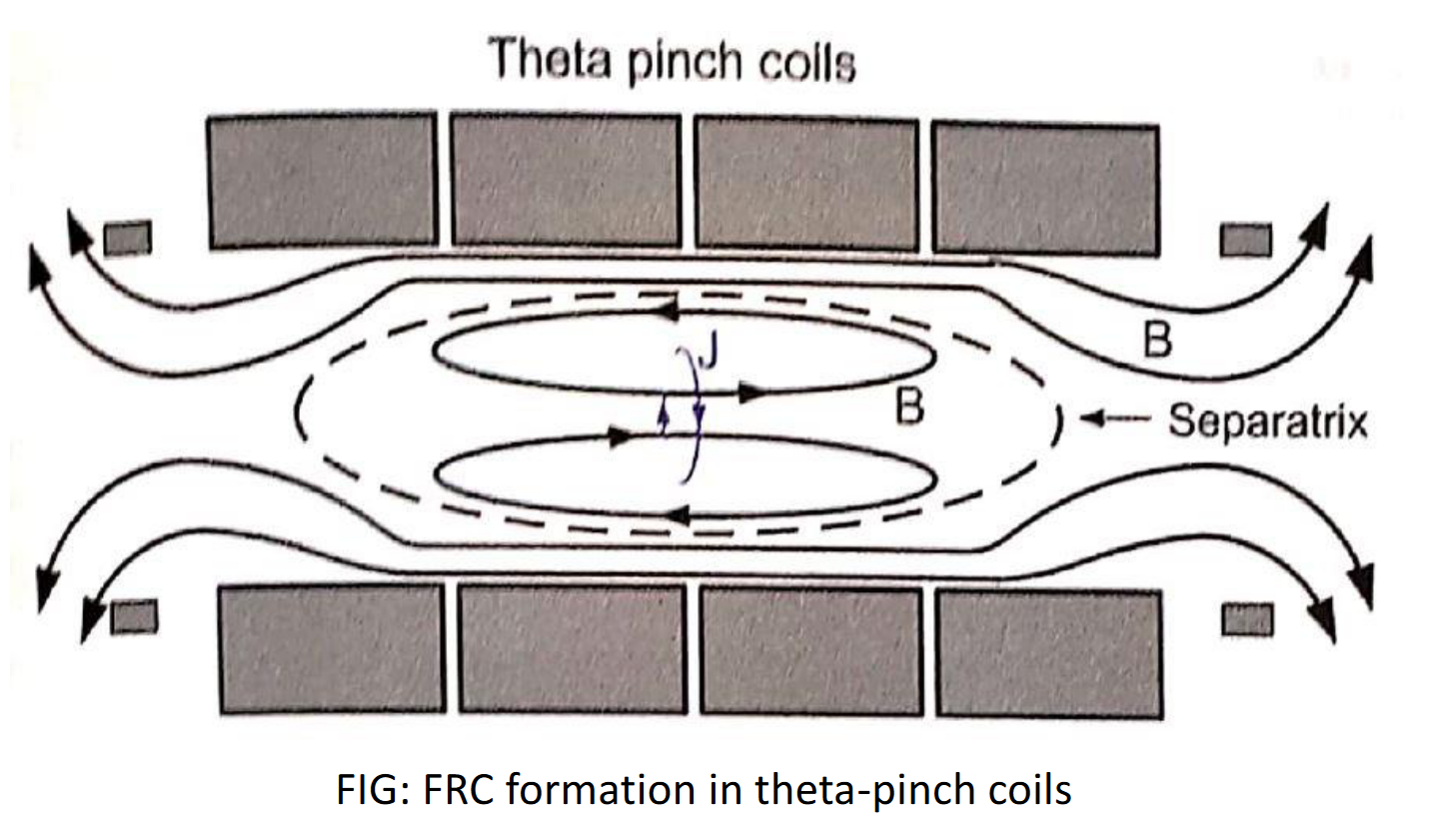
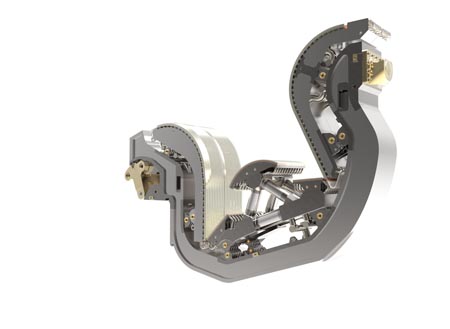
General Fusion
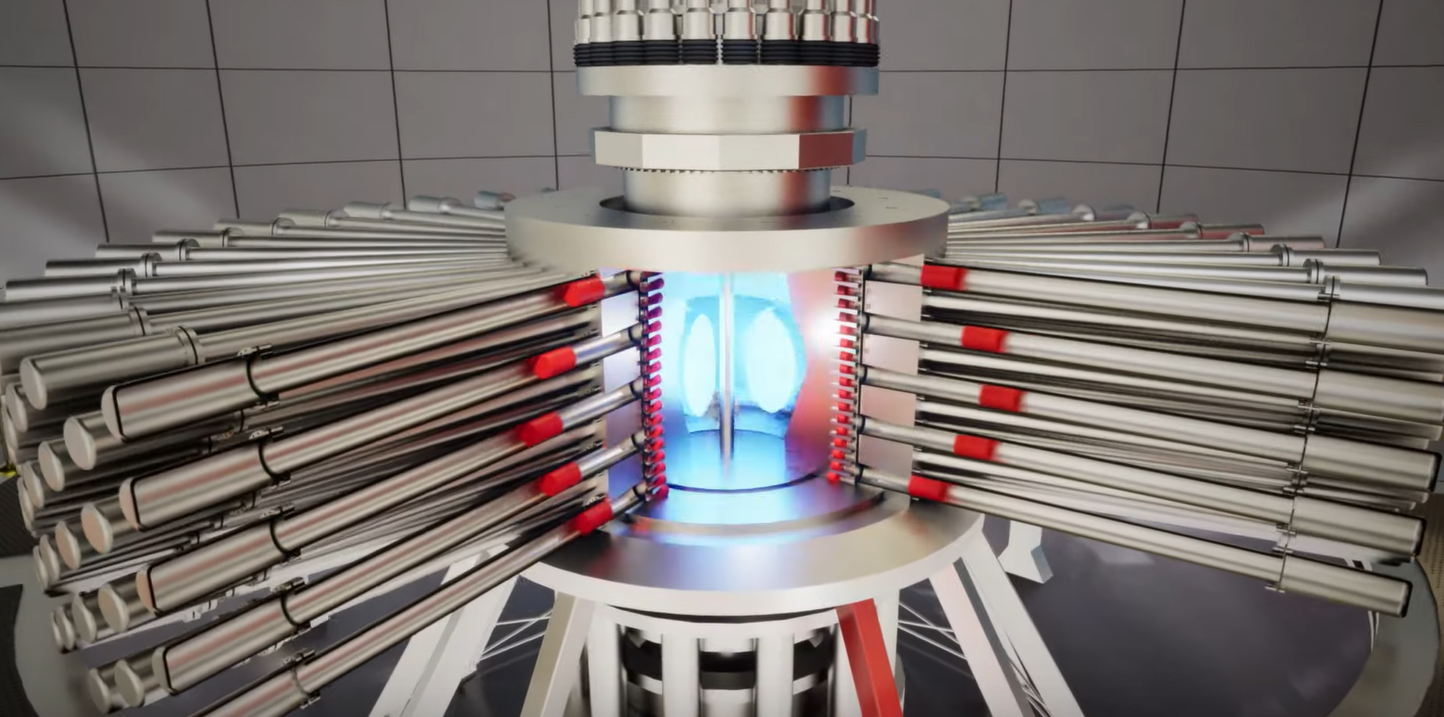
Helion
\(\ce{D + He_3 -> p + He_4}\)
Plasma
\(u_i\) : velocity of particle \(i\)
\(q_i\) : electric charge of particle \(i\)
\(m_i\) : mass of particle \(i\)
\(\rho\) : mass density \(\rho = \sum_i m_i\)
\(\gamma\) : adiabatic index
current density $$ J = \sum_i q_iu_i $$ center of mass velocity $$ v = \frac{1}{\rho}\sum_i m_i u_i $$ equation of continuity $$ \frac{\partial \rho}{\partial t} + \nabla \cdot (\rho v) = 0 $$ equation of state $$ \frac{d}{dt}\left(\frac{p }{\rho^\gamma}\right) = 0 $$ equation of motion $$ \rho\left(\frac{\partial }{\partial t}+v\cdot \nabla\right)v = J\times B-\nabla p $$ $$ \frac{\partial \vec{B}}{\partial t} = \nabla \times (\vec{v} \times \vec{B} - \eta \nabla \times \vec{B}) $$
MHD Equilibrium
$$ \nabla p = j\times B $$ - \(p\) kinematic pressure - \(j\) current density - \(B\) magnetic field
Maxwell
Grad-Shafranov Equation
Cartesian coordinates $$ \nabla^2 A = -\mu_0\frac{d}{dA}(p+\frac{B_z^2}{2\mu_0}) $$
- \(B = \left(\frac{\partial A(x,y)}{\partial y},-\frac{\partial A(x,y)}{\partial x}, B_z(x,y)\right)= \nabla A\times \hat z + B_z\hat z\)
- \(A\) : vector potential
- \(p\) : pressure in the plasma